



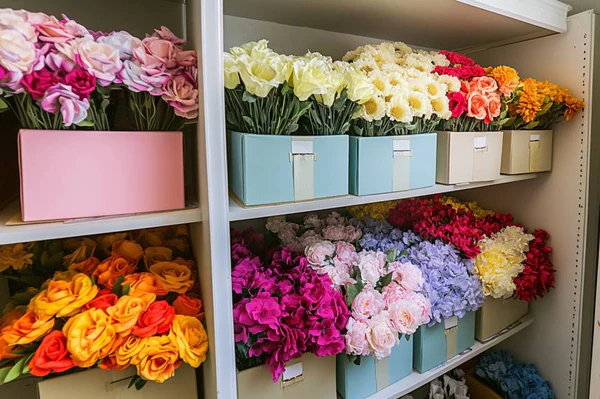
Artificial flowers are a practical and beautiful alternative to fresh blooms, offering long-lasting charm without daily maintenance. However, to keep them looking vibrant and realistic over time, proper storage is essential. Whether you rotate your seasonal décor or simply want to preserve your arrangements for future use, understanding how to store artificial flowers correctly can prevent damage, fading, and deformation.
Why Proper Storage Matters
Fake flowers are typically made from materials such as silk, polyester, plastic, or foam. While these materials are durable, they are still vulnerable to dust accumulation, moisture damage, discoloration, and crushing. Poor storage conditions can cause petals to wrinkle, stems to bend, and colors to fade. Taking the time to store them properly ensures they maintain their original appearance and extend their usable life.
Clean Before You Store
Before placing artificial flowers into storage, always clean them thoroughly. Dust and dirt left on the surface can settle deeper over time, making them harder to clean later. Use a soft cloth, a gentle brush, or a can of compressed air to remove dust. For more thorough cleaning, lightly wipe with a damp cloth and allow them to dry completely. Storing flowers while damp can lead to mold or unpleasant odors, especially in enclosed spaces.
Choose the Right Storage Container
Selecting an appropriate storage container plays a key role in protecting artificial flowers. Clear plastic bins with secure lids are ideal because they keep out dust, moisture, and pests while allowing you to easily identify contents. Avoid cardboard boxes for long-term storage, as they can attract insects and absorb moisture. Make sure the container is large enough to hold the flowers without compressing them.
Avoid Crushing and Maintain Shape
One of the most common issues with stored artificial flowers is deformation. To prevent this, never overcrowd your storage container. Arrange flowers loosely and allow enough space for petals and leaves to retain their natural shape. For delicate arrangements, consider wrapping them lightly in tissue paper or placing them in individual compartments. Stems can be secured with soft ties to keep them from shifting during storage.
Store in a Cool, Dry Place
Environmental conditions significantly impact the longevity of artificial flowers. Always store them in a cool, dry area away from direct sunlight. Excess heat can warp plastic components, while prolonged exposure to sunlight can cause colors to fade. Humid environments can lead to mold growth or material deterioration. Ideal storage locations include closets, cabinets, or climate-controlled storage areas.
Protect from Dust and Pests
Even when stored in containers, artificial flowers should be protected from dust and pests. Ensure that lids are tightly sealed and consider adding silica gel packets to absorb any residual moisture. Avoid storing flowers near food items or in areas prone to insects. Regularly check storage containers for any signs of dust buildup or pest activity.
Use Proper Wrapping Techniques
For added protection, especially for high-quality or sentimental arrangements, wrapping is highly recommended. Use acid-free tissue paper to gently cover flowers, preventing friction and preserving color. Avoid using newspaper, as the ink can transfer onto petals. For larger arrangements, breathable fabric covers can provide protection without trapping moisture.
Label and Organize Efficiently
If you store multiple arrangements for different occasions, proper labeling can save time and effort. Clearly label each container with its contents or intended use, such as seasonal décor or event-specific arrangements. Organizing your storage space ensures easy access and reduces unnecessary handling, which can cause damage.
Avoid Frequent Handling
Repeated handling can lead to wear and tear, especially for delicate artificial flowers. Try to minimize how often you move or rearrange stored items. When retrieving flowers, handle them gently by the stems rather than the petals to maintain their structure and appearance.
Refresh After Storage
When you take artificial flowers out of storage, they may need a bit of refreshing. Gently reshape petals and leaves by hand, and remove any dust that may have settled. A quick cleaning or light steaming (for certain materials) can help restore their natural look. This step ensures your arrangements appear as fresh and appealing as when they were first stored.
Long-Term Storage Considerations
For long-term storage, extra precautions are necessary. Rotate your storage periodically to ensure no prolonged pressure is placed on specific areas. Check containers every few months to ensure conditions remain optimal. Investing in high-quality storage solutions can make a significant difference in preserving the beauty of your artificial flowers over the years.
Conclusion
Artificial flowers can remain beautiful and lifelike for many years when stored properly. By cleaning them before storage, using suitable containers, maintaining proper environmental conditions, and handling them with care, you can protect your investment and enjoy their decorative appeal whenever needed. Thoughtful storage not only preserves their appearance but also saves you money and effort in the long run.
