



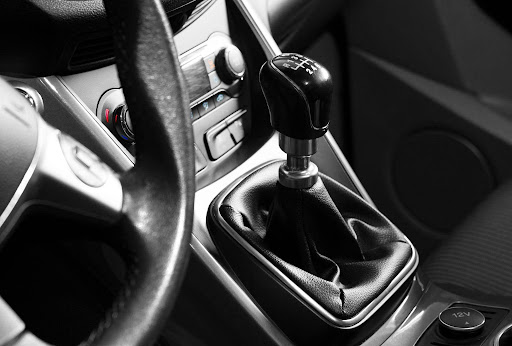
The R154 commands prices that have nothing to do with its mechanical complexity. It’s a five-speed longitudinal-mount manual gearbox originally specified for Toyota’s turbocharged inline-six platforms: JZA70 Supra, JZX81 Mark II, JZX90 Cresta, JZX100 Chaser. Its case is iron. Its synchros are robust. Its torque rating, when properly built, exceeds anything most street tuners actually need. None of that explains why a clean used unit costs what it does on the import market. The community’s loyalty to it does.
That loyalty has driven R154 prices above multiple newer gearboxes that match or beat its capability. Anyone shopping the catalog for JDM Toyota transmissions has to think hard about whether R154 reputation justifies the premium, or whether a different unit makes more sense for the actual build. The answer depends on torque, chassis, and budget — in that order.
Identify your application before comparing units
The first question isn’t “which transmission is best.” It’s “what’s the engine going in front of it, and what’s the chassis behind it.” Toyota’s manual gearbox catalog is broad, and each unit was designed for specific torque levels, specific bellhousing patterns, and specific output-shaft applications. Mixing those incorrectly creates problems that cost real money to undo.
For inline-six builds, the legitimate options are the W58, R154, V160 Getrag, and the rare V161. For four-cylinder applications you’re looking at the C-series and J-series boxes. For V-configuration engines it gets more platform-specific. Sort the input variables first, then narrow the gearbox shortlist.
Map the W58 against the R154
The W58 is the most common stock manual found behind Toyota inline-six engines from the 1980s and 1990s. It came behind 7M-GE, 1JZ-GE, and 2JZ-GE applications across multiple chassis. Aluminum case, internally lubricated, decent synchros for an OEM unit, and a torque rating that real-world testing puts somewhere around 300 lb-ft before the gears begin protesting under sustained load.
The R154 is the same form factor with iron internals, beefier shafts, and a substantially higher torque ceiling. It came behind 1JZ-GTE and 7M-GTE applications. Anything turbocharged from the factory got the stronger box. Real-world torque capacity with stock parts sits in the 400 to 450 lb-ft range, and dog-engagement aftermarket gear sets from PPG, Holinger, and similar specialists push that figure above 600 reliably.
Identical bellhousing pattern. Identical mount points. Identical input shaft. The only practical differences in a swap are weight (R154 is heavier), gear feel (R154 is notchier and shorter throw), and durability under sustained boost (R154 wins decisively).
For a naturally aspirated 2JZ-GE producing 230 hp stock, the W58 is fine and arguably preferable for cost reasons. For anything turbocharged, the R154 is the right answer unless budget forces an alternative.
Compare the V160 Getrag against domestic alternatives
The V160 was the six-speed manual that came in the JZA80 Supra Twin Turbo and one Aristo variant. Built by Getrag under license, it’s the strongest stock Toyota gearbox and arguably the strongest stock six-speed in any Japanese performance car of its era.
It also costs a small fortune. JDM V160 units, when they appear at all, sit in a price range that puts them out of reach for most builders. The aftermarket has stepped in with replacement six-speeds: Tremec T56 Magnum kits, Holinger sequentials for race applications, and various drag-spec dog boxes that match or exceed V160 capability for less total spend.
Where the V160 still wins is OEM integration. If you’re building a JZA80 Supra and want the car to appear factory, the V160 is the only gearbox that fits the OEM bellhousing without an adapter plate. If period-correct specification matters to the build, that detail is worth something. If it doesn’t, the T56 swap is faster, cheaper, and stronger.
Evaluate the C-series and J160 for four-cylinder builds
Four-cylinder Toyota platforms use a different gearbox family entirely. The C56 came behind 3S-GTE and 3S-GE applications in MR2 Turbo and Celica GT-Four chassis. The C160 was specified for Corolla-platform applications including the AE86 4A-GE pairing that the drift community keeps alive.
These are physically different units from the W/R-series. The bellhousing patterns don’t match Toyota’s inline-six pattern. Don’t mix them. A C-series gearbox is appropriate for C-series engines. The torque limits are lower across the board — the C160 in particular gets fragile above 200 lb-ft, which is why turbo 4A-GE builds usually swap to a stronger unit before output doubles stock figures.
The J160 entered service later and sits a step above the C-series in capability. It came behind certain MR2 Spyder and Altezza applications and shows up in builds where the owner wants a stronger four-cylinder gearbox without committing to a full domestic conversion.
Account for ratios, not just gear count
Six speeds on paper sounds better than five. In practice, what matters is the spread of ratios and where the engine’s powerband sits relative to the gearing.
The R154 has a tighter ratio spread than the W58. The V160 has six speeds, but its top gear is a true overdrive that doesn’t shift cruising RPM down as dramatically as buyers expect. JDM and US-market versions of the same gearbox sometimes have different final drive ratios depending on the rear axle they were designed for, which means a “drop in” can change cruising RPM by 500 or more without changing tire size.
The math matters. Multiply gear ratio by axle ratio and tire revolutions per mile, then check what RPM the engine sits at on the highway. A boosted engine living at 3,500 RPM at 75 mph will get tiring fast. The same combination at 2,800 RPM stays civilized for long drives.
Verify mileage, condition, and synchro health before committing
JDM transmission imports follow the same logic as engine imports. Lower-mileage units pulled from recently scrapped donor cars beat older units of unknown provenance. Look for documented mileage in the 50,000 to 65,000 range from suppliers who run the gearbox on a stand before listing it.
Synchro health is harder to verify on a unit that’s been pulled and crated. Asking for video of the gearbox shifting on a stand, or buying from a supplier who accepts returns on a synchro failure within a defined window, are both reasonable risk mitigations. Internal inspection by pulling the rear cover and checking gears for spalling is the gold standard, but most importers don’t offer that as a service. Buy from someone with a return policy or warranty that covers the worst case.
Plan the install before placing the order
Cross-member modifications. Driveshaft length. Speedometer drive type (cable versus electric). Reverse light wiring. Clutch hydraulic compatibility. Each of these will surface during install if it wasn’t addressed at purchase.
The cleanest swaps happen when the buyer mocked up the install in their head before the box arrived. The ones that drag on for months happen when the buyer assumed it would all just bolt up.
Toyota’s manual gearbox lineup covers a lot of ground. The right unit for any given build depends on torque target, chassis constraints, budget, and how period-correct the project needs to feel. Match those four variables against the gearbox specifications and the answer usually presents itself.
