



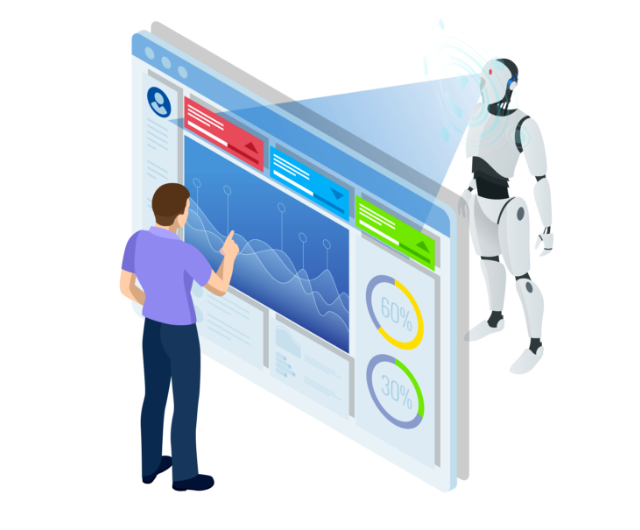
Businesses that have already invested in analytics infrastructure are discovering that generative AI is the missing layer that converts insights into action. When Generative AI Development Services are aligned with mature AI Analytics Services, organisations gain not just the ability to understand their data but the ability to communicate, act on, and scale decisions derived from that data — automatically and at enterprise speed.
The Analytics and Generative AI Convergence
AI Analytics Services have historically focused on answering questions: which customers are most likely to churn, which products will be in the highest demand next quarter, which operational processes produce the most waste. These systems generate insights but typically surface them as dashboards, reports, or alerts that still require human interpretation. Generative AI Development Services introduce a decisive new layer on top of this analytics foundation. Instead of presenting a chart showing customer churn risk, a generative AI application can compose a personalised retention offer for each at-risk customer and send it automatically. This convergence is generating the most excitement among enterprise AI buyers today.
Building the Integrated Stack
Effective integration of Generative AI Development Services with AI Analytics Services requires careful architectural design. The analytics layer must produce outputs — scores, segments, predictions — in a format that generative AI applications can consume in real time. This typically means moving from batch analytics to near-real-time data pipelines, and designing APIs that expose analytical outputs to downstream AI systems. The generative AI layer must use analytical outputs as grounding context, ensuring that the language it generates reflects specific data about the specific customer, product, or process at hand rather than producing generic content.
Use Cases That Demonstrate Value
The highest-value applications of this combined capability cluster around personalisation at scale, decision automation, and knowledge synthesis. AI Analytics Services identify individual customer preferences and generative AI creates tailored content, recommendations, and communications — making true one-to-one marketing viable at enterprise scale for the first time. In decision automation, analytics identifies situations that meet specific criteria and generative AI drafts the appropriate response: a pricing adjustment, risk escalation, or operational instruction.
Governance Considerations
Organisations integrating Generative AI Development Services with AI Analytics Services should plan for the governance implications. When AI systems are generating communications, making pricing decisions, or drafting operational instructions automatically, the audit trail and human oversight requirements become more demanding. Building appropriate governance into the architecture from the outset is far more efficient than retrofitting it after launch.
Conclusion
The combination of AI Analytics Services and Generative AI Development Services represents one of the most powerful capability pairings available to enterprises today. Organisations that build this integrated stack will find themselves operating with a level of intelligence, personalisation, and automation that creates durable competitive advantages across every function they apply it to.
