



Polyether ether ketone (PEEK) is an enhanced thermoplastic polymer that’s revolutionizing myriad sectors thanks to its high-performance properties. From the bodies of spacecraft to the heart of your car engine, PEEK is there, quietly exceeding expectations.
But have you ever wondered how this wonder material is created? Let’s take a closer look at what goes on in a state-of-the-art PEEK manufacturing facility. This article will also explore the equipment and testing methods PEEK manufacturers utilize.
Meticulous Processing From Pellets to End Products
Transforming raw materials into finished polyether ether ketone products is a testament to precision engineering, advanced technology, and rigorous quality control. Although seemingly simple, the production process involves a series of carefully orchestrated stages:
- Polymerization
It all begins with a multi-step chemical reaction that combines the monomers 4,4’-difluorobenzophenone and the disodium salt of hydroquinone. This process creates a high-purity PEEK resin, typically in powder form. - Compounding
The PEEK resin is then melted and mixed with additives to enhance or impart the desired properties for its intended application. These additives often include reinforcements like glass, carbon fiber, or graphite, specialized fillers to improve dimensional stability, or pigments to achieve specific colors. - Melt Processing
The compounded PEEK, now in granular form, is ready for the actual transformation and fed into sophisticated machines, typically extruders or injection molders. These high-tech marvels melt the PEEK granules at precisely controlled temperatures and pressures, converting them from a solid to a workable form. Here’s how they work:
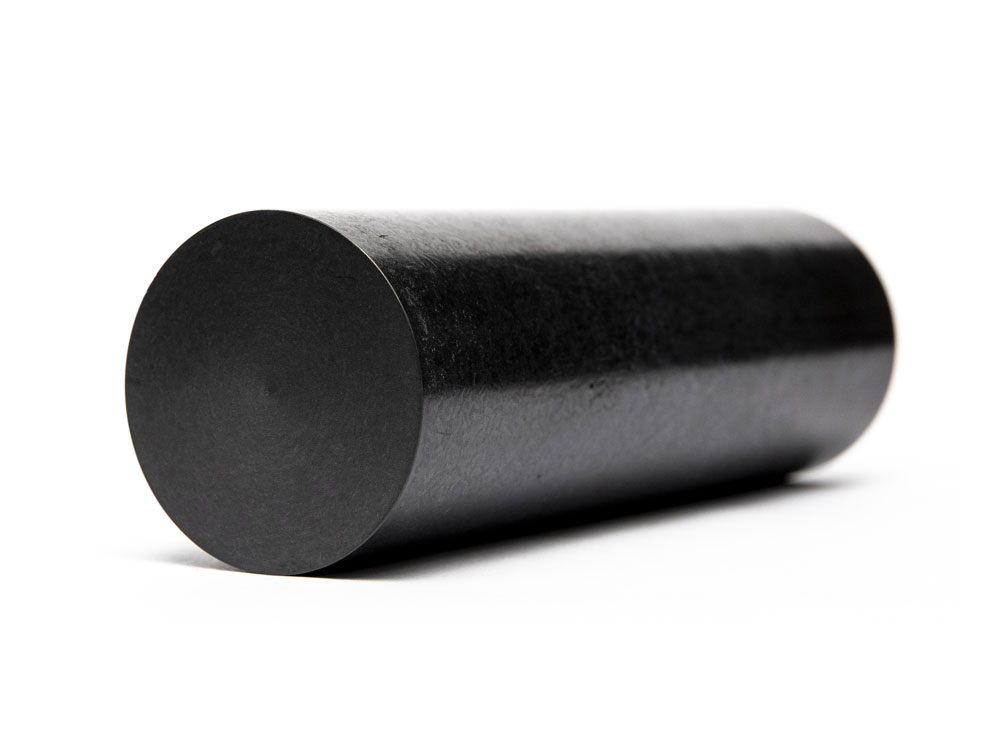
- Extrusion: Molten PEEK is forced through a die with a particular cross-sectional profile. This procedure is ideal for creating PEEK stock materials in various sizes and shapes, such as rods, tubes, pipes, and sheets.
- Injection Molding: Many manufacturers inject molten PEEK into the cavities of intricate molds. This method enables them to craft complex three-dimensional components with high precision.
- Cooling and Solidification
Once the molten PEEK is in its desired shape, it’s carefully cooled. This controlled cooling process allows the PEEK to solidify and retain its form, ensuring the final product is dimensionally accurate and structurally sound. - Post-Processing
While some PEEK components emerge from molding ready for use, others require further machining and finishing to meet specific application requirements. This may involve procedures like:
- Cutting: This process removes excess material or separates components. Manufacturers typically use laser cutters or saws to ensure clean cuts and exact measurements.
- Drilling: Depending on the application requirements, manufacturers sometimes have to create holes with precise diameters and depths in the end product. They utilize tools that can break through PEEK’s toughness.
- Milling: This procedure shapes and removes material using rotary cutters to achieve intricate geometries and surface finishes.
- Annealing: Some end-users specifically need PEEK polymers with high crystallinity, which upgrades their density, strength, stiffness, and machinability. Heating the material achieves this ordered crystalline form and softens and relieves stress from the material, preparing it for machining.
- Surface Treatments: Manufacturers can enhance surface properties like wear resistance, friction, or aesthetics through techniques like polishing, coating, or texturing.
Advanced Manufacturing Machinery
Technology is the backbone of PEEK production facilities. They need cutting-edge equipment to ensure precision, consistency, and efficiency from start to finish. Some of the most critical machines include:
- Twin-Screw Extruders: Because PEEK has a high melting point, many manufacturers employ twin-screw extrusion machines capable of withstanding extreme temperatures for melt processing. Their twin rotating screws ensure thorough mixing and precise temperature control, resulting in a homogeneous melt that’s ready to be shaped.
- Precision Injection Molding Machines: Creating complex PEEK parts with tight tolerances and fine details needs advanced injection molding equipment. These devices have sophisticated control systems to inject molten PEEK into molds with high pressure and accuracy.
- Computer Numerical Control (CNC) Machining Centers: These machines are indispensable for secondary operations on the final products. They enable manufacturers to cut, drill, and mill according to the desired specifications with unparalleled accuracy and consistency.
- Coordinate Measuring Machines (CMMs): These machines act as quality control inspectors in production. They meticulously measure each component’s dimensions, helping manufacturers ensure precise dimensions and compliance with stringent industry requirements.
Quality Control Testing and Assurance
Maintaining the highest quality standards is mandatory in PEEK manufacturing, making quality control a cornerstone of operations. Rigorous testing methods are implemented throughout the process to guarantee every component’s uncompromising performance and reliability. These measures include:
- Spectroscopic Analysis: Techniques like Fourier-transform infrared spectroscopy (FTIR) verify the PEEK material’s chemical composition. The results of this analysis can confirm whether the material is free from impurities and meets the required specifications.
- Mechanical Testing: Quality control technicians inspect the finished PEEK products’ tensile strength, impact resistance, and flexural modulus. They employ varying tests to verify whether the material can withstand the stresses and strains it will encounter in operations.
- Thermal Analysis: PEEK is sought after for its resistance to extreme heat, so each end product must be evaluated to ensure it can maintain structural integrity and reliability under elevated temperatures. Technicians typically check the material’s melting point, glass transition temperature, and thermal stability through differential scanning calorimetry (DSC) or thermogravimetric analysis (TGA).
- Dimensional Inspection: Quality control technicians must check whether the PEEK components meet the application’s dimension and tolerance requirements. They often use advanced metrology equipment such as optical scanners and CMMs for this assessment.
Explore More Industrial Applications With PEEK Thermoplastics
Polyether ether ketone manufacturing is a testament to human ingenuity, a fusion of advanced materials science, precision engineering, and stringent quality control. Every step in the process is performed with utmost care and accuracy to craft products with tailored characteristics and superior performance. Get in touch with local PEEK manufacturers to learn how this polymer can upgrade your products and operations.
